Santa Fe is Inching Forward when it comes to housing, but maybe not in the right direction

We all know that housing in Santa Fe is broken. There are many reasons for why this is the case, and this post will not get into all of the factors. But above all else, housing cannot be fixed in Santa Fe without a revised and updated General Plan and Land Use Code. This is the umbrella fix we need in order to tackle all of the other issues.
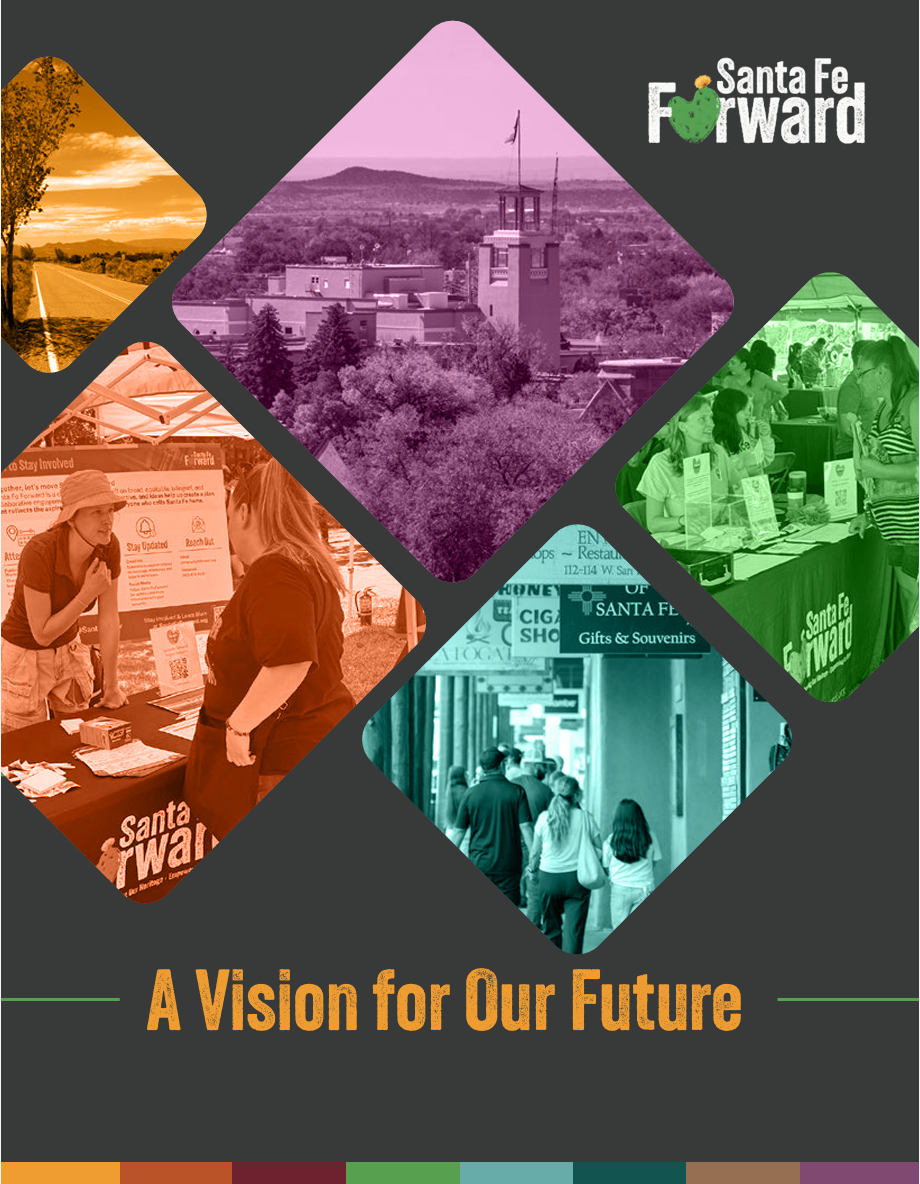
Santa Fe recently released a draft of the first phase of the General Plan Update, also known as Santa Fe Forward. We made a video last fall about the general plan, and how it serves as the roadmap for how the city will grow and develop for the foreseeable future. After an initial public input process, which they referred to as “The Vision and Goals Phase” they have released a draft of their “Vision Summary”. The document looks lovely, but is vague and really puts the “general” into “general plan”.
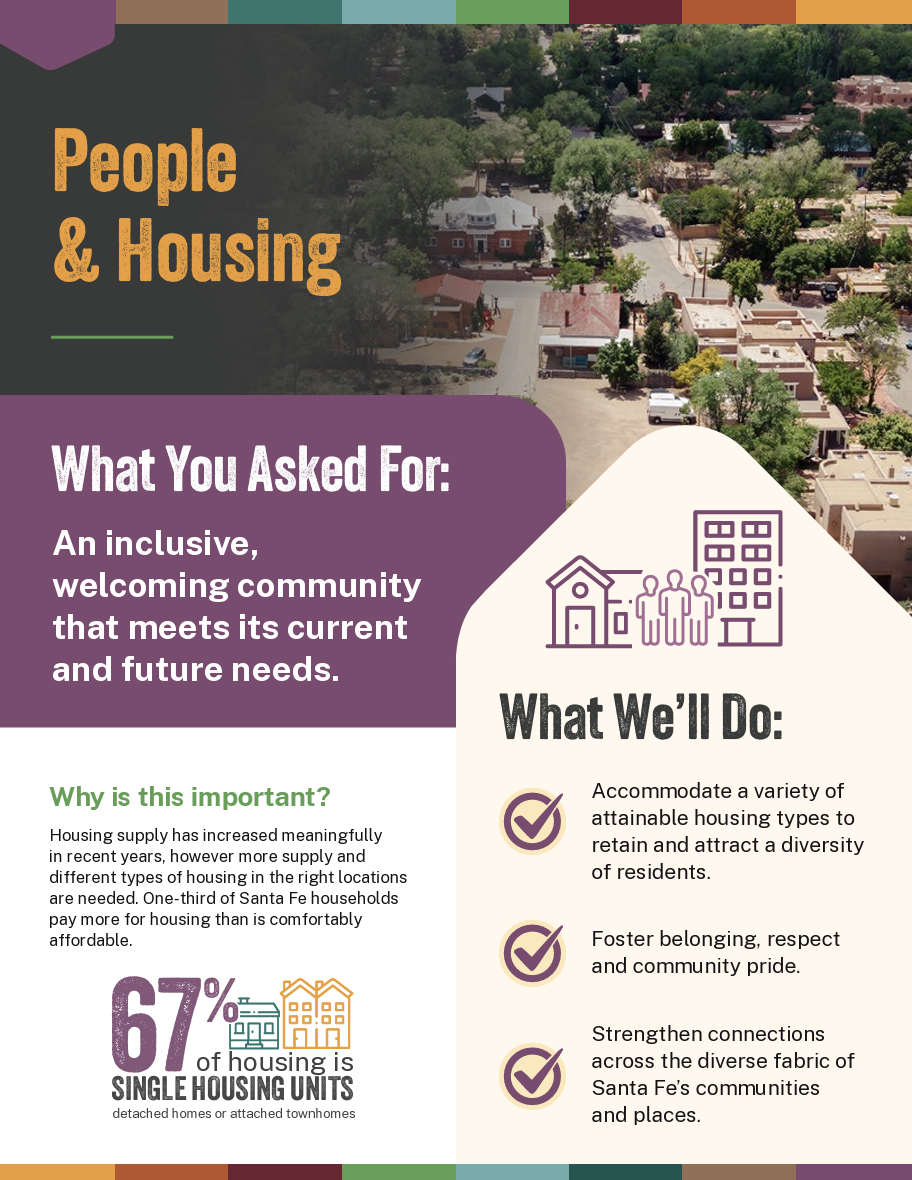
A few nights ago I attended a talk called “Who Gets to Live in Santa Fe” by Jenny Schuetz, a former economist at the Federal Reserve Board and the author of Fixer Upper: How to Repair America’s Broken Housing Systems. The talk was put on by Homewise as part of their Livability Speaker Series, and was informative and engaging. One thing that stood out to me was a quote from Heather Lamboy, Santa Fe’s current Land Use Director: “I hope that the update of the general plan and land use code will build more community trust.” Unfortunately, I don’t think they are off to the best start.
There are a few things people should know about how the city is handling the general plan update. Traditionally an updated General Plan is put in place BEFORE updating the Land Use Code. But in Santa Fe this process is happening simultaneously. The city has hired an outside consulting firm, called WSP Consulting to work on the general plan update, and many people question whether they are the right group to be taking the lead in such an important process for our city. And on top of that, a DIFFERENT consultant is in charge of the Land Use update, making this process particularly confusing.
...our contributions, as well as our actual neighborhoods, were once again ignored, made invisible, and, through that invisibility, threatened.
-Earth Care's Miguel Acosta
Miguel Acosta from Earth Care was a subcontractor on the project from the beginning, in order to help the city with community engagement on the southside. He told me that the city initially released a draft of the plan that completely disregarded all of their input:
"When this project kicked off, and they held an orientation for all the community partners who would be doing engagement, there was lots of emphasis by the contractor and the city officials on the need for equity in developing the general plan and the land use code. They repeated several times that the plans had not been updated in 25+ years, and that although there was lots of mention of equity in those old plans, there was no plan for implementing equity into the actual work. In other words, things are not good for our low-income, POC, immigrant communities because it was not in the plan. But now all that would change. So we engaged our residents of the 20+ neighborhoods that are a part of our Vecindades Project, through house meetings, virtual meetings, at tabling events, and through our partner organizations.We did such a good job that the city and the contractor recognized our work by adding to our budget. I felt like this was really different and the "plan" would actually include us and serve as a basis for equity investment and social development. I was really looking forward to this next phase of scenarios, as that's what we've also been working on with our neighborhoods. So I was shocked to see that our contributions, as well as our actual neighborhoods, were once again ignored, made invisible, and, through that invisibility, threatened. It took several conversations with the contractor to finally get them to talk to the city, and ultimately the scenarios were corrected."
Many people and organizations who have been working on housing and development are not very happy with how the first phase of Santa Fe Forward has rolled out. Friends of Architecture put forth a response to the draft on their Substack called Santa Fe Forward is a Sprawling, Jargony Mess. I encourage everyone to look at their response.
"Unfortunately, the city’s draft frameworks don’t resemble actual scenario planning. Instead of presenting real spatial alternatives, they offer abstract ways of viewing the city that reinforce divisive “us-vs-them” dynamics."
-Friends of Architecture Santa Fe
One point they make is that the Scenario Planning section of the draft doesn’t actually offer tangible, detailed scenarios but instead provides vague, general “frameworks” intended “to explore how the city can preserve, grow, invest, connect, and adapt over time.” These frameworks are not only vague, but also reinforce the de facto segregation of neighborhoods that currently exists in Santa Fe based on race and income (essentially leaving alone the historic east side and continually putting strain on the southside to carry the burden of new development without providing real investment in these neighborhoods).
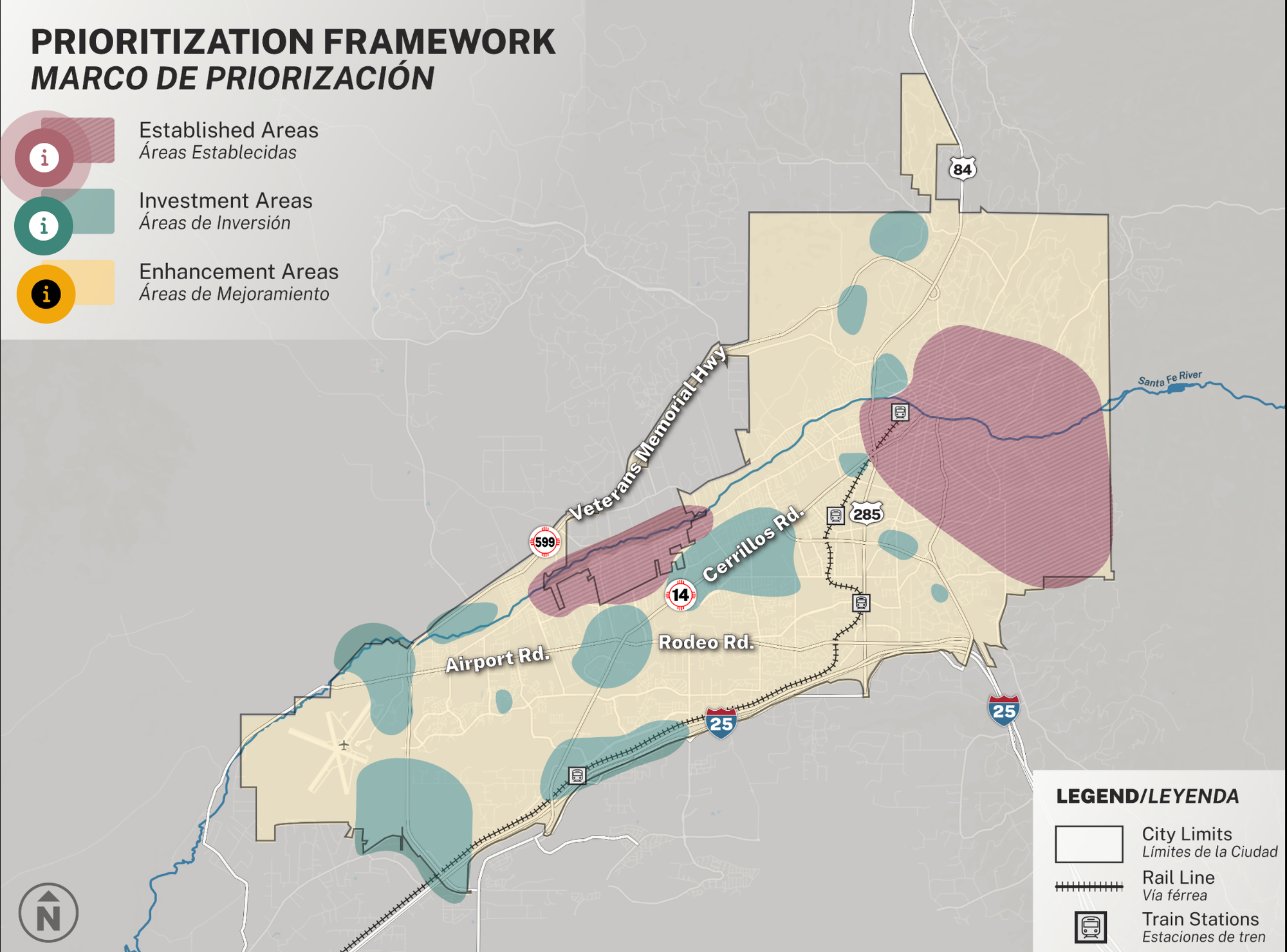
Santa Fe Forward's Prioritization Framework
Another group that has responded to the city’s draft is Housing for Santa Fe, a coalition of many groups across different sectors of Santa Fe who came together last year during the election to establish a unified platform for candidates and elected officials to sign on to. What is remarkable about this coalition is that it includes groups who often don’t see eye to eye on many issues, which signifies how much the housing crisis impacts ALL of Santa Fe and how important it is to get this right. The coalition has come out with three major recommendations for the General Plan:
- Nice Neighborhoods for All - That ALL of Santa Fe should provide housing choices for people of different income levels in vibrant, sustainable, and connected Neighborhood Centers, close to amenities like parks, schools, shopping centers, cultural events and restaurants
- Local Housing Choice - to enable middle housing, which would include starter homes that are smaller (like duplexes, complexes, and accessory dwelling units) and would be more enticing to local developers and builders and more affordable for local residents
- Make It Easy - simplifying the land use code and easing permitting restrictions
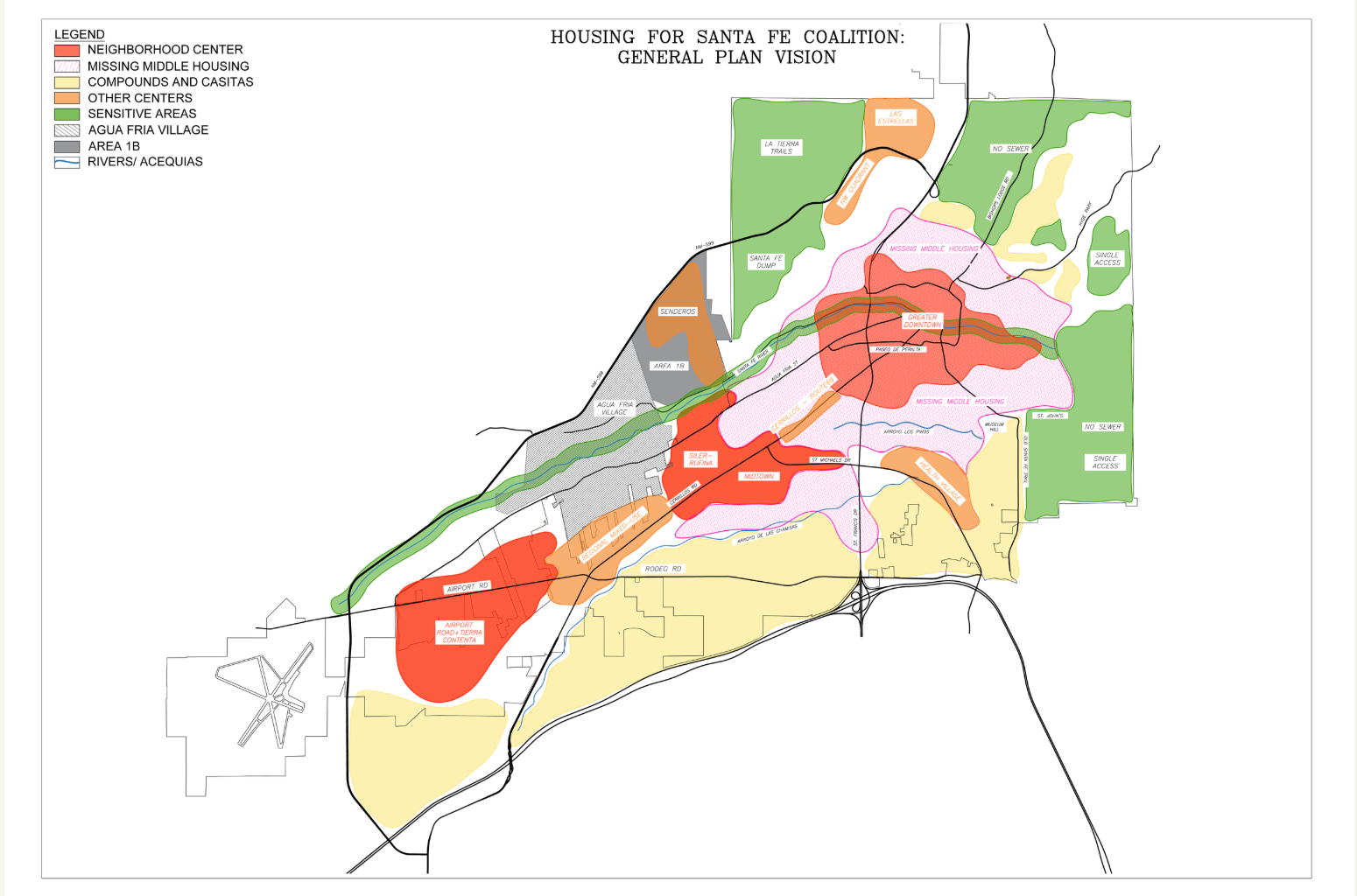
I also encourage you to take a look at their recommendations to learn more about what they have identified as missing from the current plan.
This town is full of many people who are very knowledgeable about planning and housing and who have been thinking a lot about these issues. It is up to us as a community to hold our city officials accountable and make sure they are responding to our needs and providing a truly visionary and forward thinking plan. You can provide input on the work Santa Fe Forward has done so far. They are accepting comments until August 16th. Go to Santa Fe Forward to explore the frameworks and “Share Your Feedback.”