Thoughts on The Living Room: Upgrading Santa Fe - Guest Post by Stephanie Nakhleh
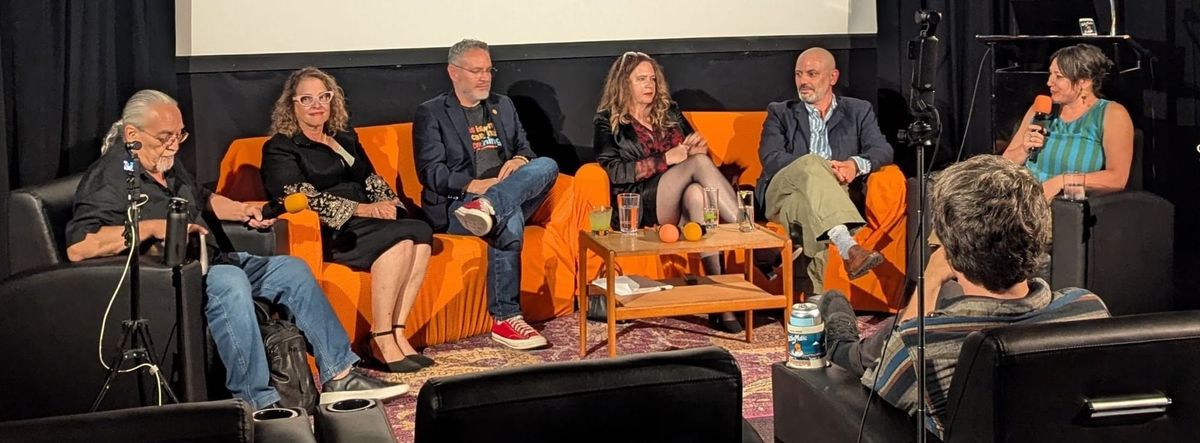
At our last Living Room on September 17th, we hosted a conversation about the status of the update on the city's general plan. Journalist Stephanie Nakhleh wrote this comprehensive recap and analysis of the conversation, which she has given permission for us to repost here. Please support Stephanie by subscribing to her amazing substack: We Can Have Nice Things. You can watch the full video of the conversation at the end of this post.
‘The future of everything’ for Santa Fe
A recap of Thursday’s 505OMATIC panel on the first rewrite of the city’s general plan in 27 years
Stephanie NakhlehSep 22, 2026
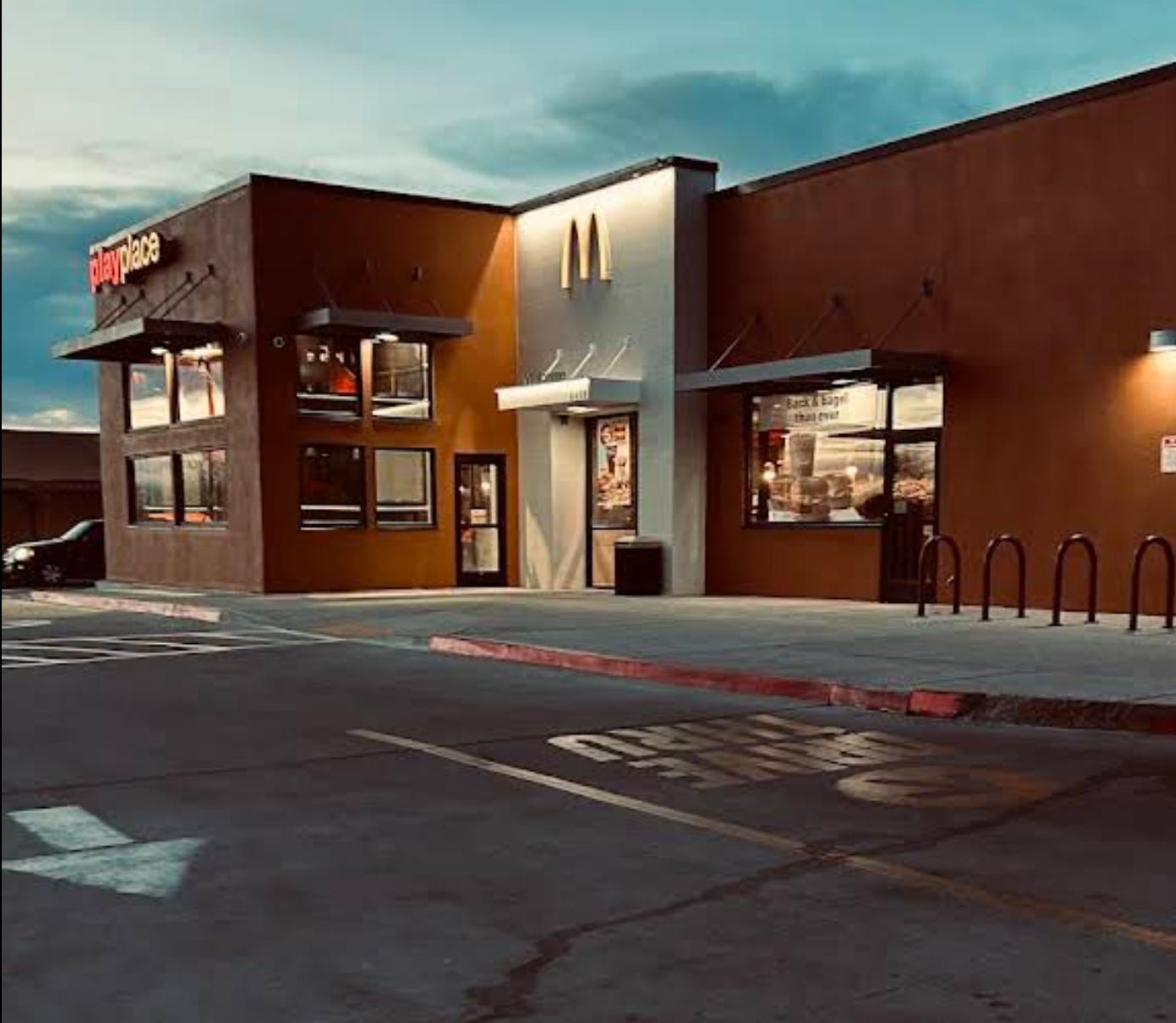
According to Miguel Acosta, there is only one safe place for a toddler to play anywhere along Airport Road, and it’s the McDonald’s.
Acosta, co-director of the community organization Earth Care, said so last Thursday night, adding that little has changed since he and former county commissioner Ed Moreno surveyed residents 15 years ago. Earth Care works in 20 neighborhoods—mostly mobile home communities annexed from the county—along the Airport Road corridor on Santa Fe’s southwest side. Acosta has called them “no more than labor camps, really.” At the panel, he said, “There’s no libraries, no churches, no parks, no recreation.” Airport Road itself, he said, is “a highway” with a record of speed and deadly crashes.
City Councilor Pilar Faulkner, who represents the area (which is part of District 3), agreed. At Tierra Real, a mobile home community off Airport Road, she said “some of their street lights have fallen down, and there’s active live wires.” The city considers the park’s roads private property and has said maintenance is the residents’ responsibility.
“You have kids who are sometimes having to be adults because the parents are not able to be home because they’re working to keep the family in a safe financial space,” said Faulkner. “You have ICE terrorizing these populations. And this is the population that the city chooses to not prioritize?”
Upgrading Santa Fe
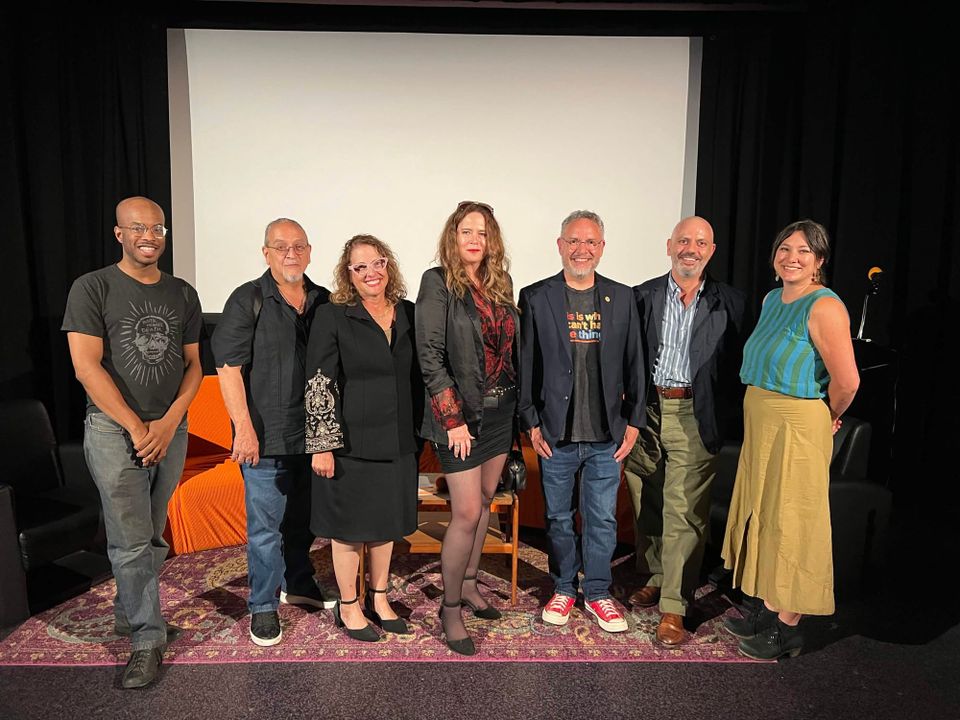
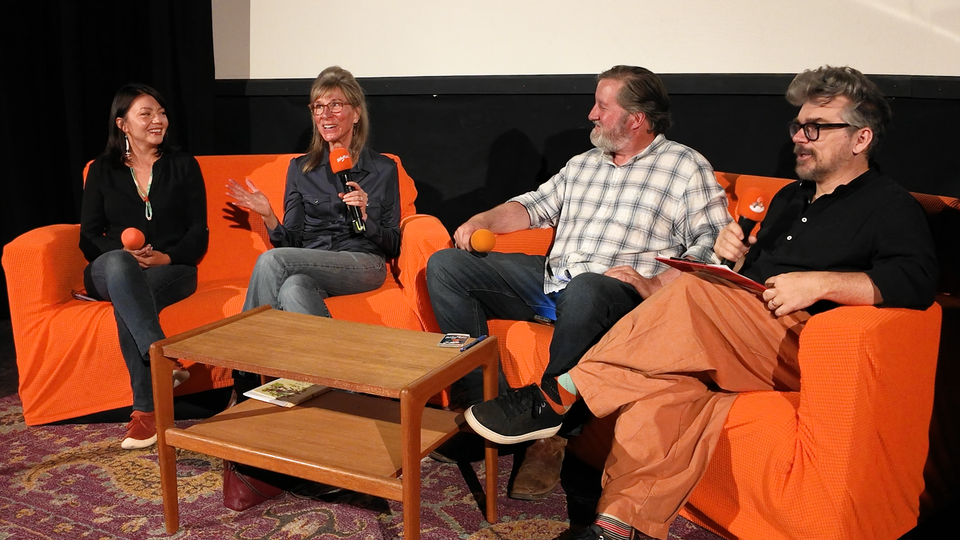
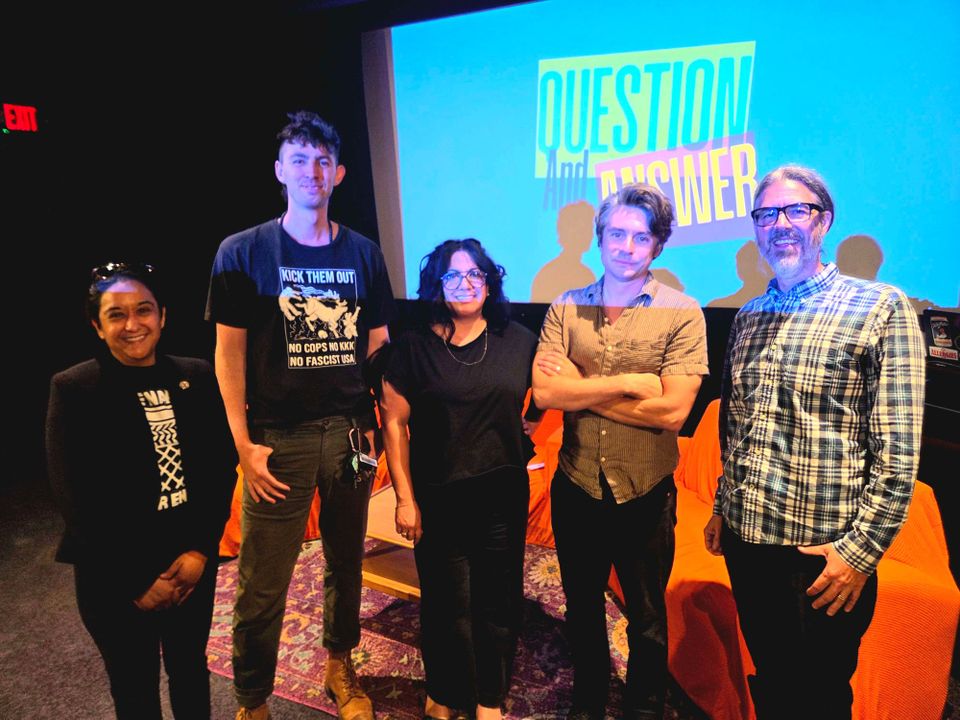
Both spoke at “Upgrading Santa Fe,” a Sept. 17 panel at the Jean Cocteau Cinema sponsored by 505OMATIC, an independent collective of journalists and civic advocates. The subject was Santa Fe Forward, the rewrite of the city’s general plan.
The room was collegial but tense as the evening opened with a litany of complaints about the scenario Santa Fe Forward envisioned. Lamboy said the city now hopes to finish the plan by January, after a public study session with the Governing Body (the city council plus the mayor) in November. January is the third target date: in March 2025 she said the end of 2026, and in May, staff told the Planning Commission “early fall.”
A city sorted by class—and investment
A city’s general (or comprehensive) plan is a document meant to direct the zoning code and where growth and public investment should go. It’s an official long-range vision for land use, housing, transportation, and services. Santa Fe’s was last adopted in 1999, and it has not been updated since. Santa Fe Forward is the city’s opportunity to reckon with the events of the last quarter century and use that reckoning to plan for the next.
The last 25 years of planning in Santa Fe have led primarily to one undesirable outcome—namely, as Bustamante put it, that “people who work here cannot afford to live here.” Regulations written to preserve a particular aesthetic froze the physical character of the oldest neighborhoods, but did nothing to protect the people in those homes. A 2021 city-commissioned report, Continuity and Connection, found that between 1980 and 2018, as the city grew by 69%, the population inside the historic districts fell by 26%. Multigenerational family homes became galleries, second homes, and short-term rentals. The architecture was preserved, in other words, but the community was not.
Working residents were pushed south and southwest instead, into subdivisions and trailer-park communities the city annexed after the fact, where amenities like sidewalks, streetlights, and parks never followed.
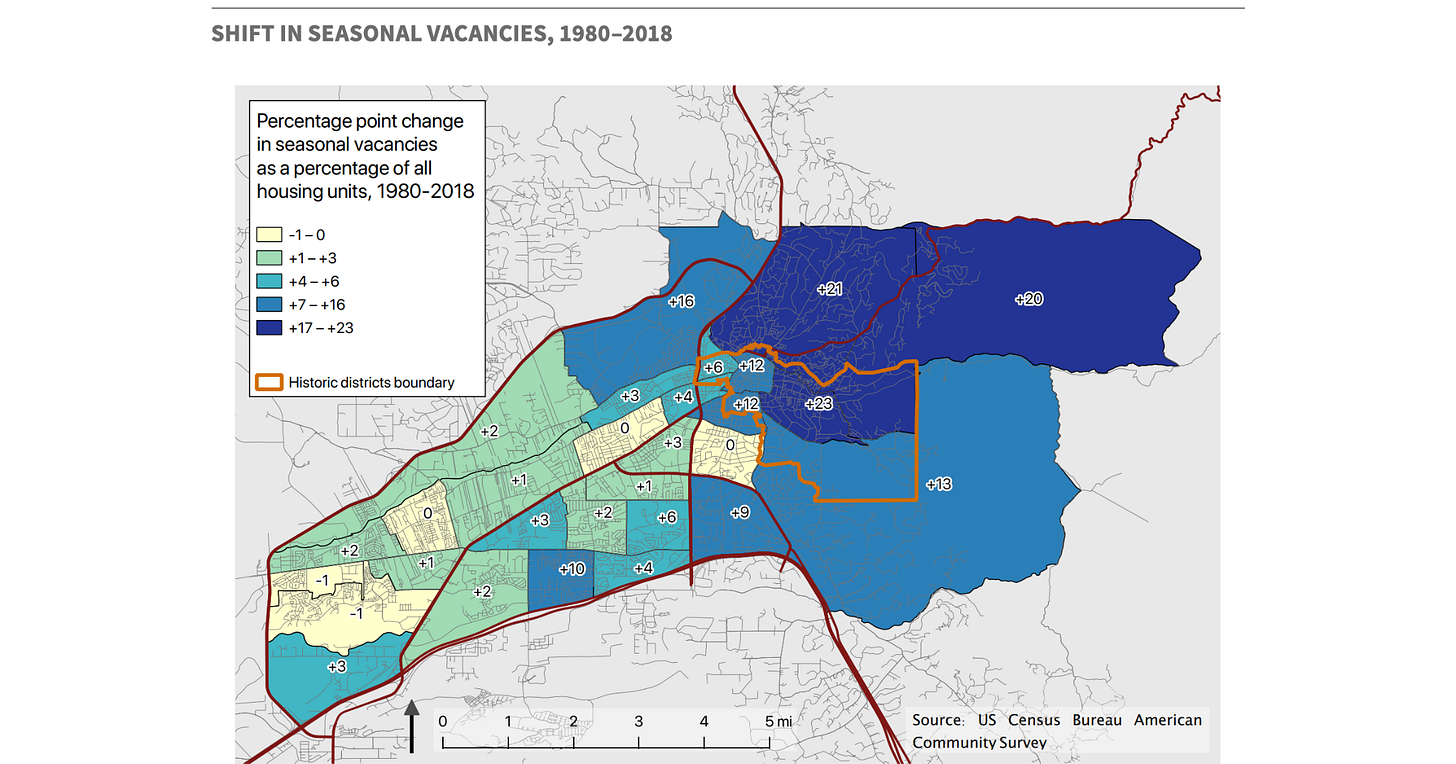
The scenario planning that’s come out of Santa Fe Forward so far has not inspired public confidence that the new plan would change this grim status quo. The draft frameworks sorted the city into east-side “Established Areas” and south-side “Investment” and “Enhancement Areas.” In an August article on Substack, Friends of Architecture Santa Fe argued that this locked in class divisions and shielded wealthy neighborhoods from change:
Unfortunately, the city’s draft frameworks don’t resemble actual scenario planning. Instead of presenting real spatial alternatives, they offer abstract ways of viewing the city that reinforce divisive “us-vs-them” dynamics.
For Acosta, the scenarios had a more basic problem. His organizers had tried not to do the “extractive work” of gathering residents’ input and handing it off. They held house meetings and kept residents invested in each next phase. Then the draft scenarios came out, and he saw none of that feedback incorporated into the plan. Airport Road appeared only as a street. “A connector,” he said.
“A plan is also a value statement,” Acosta said. It tells residents what the city values, and it does so spatially. He grew up in Chicago, where schoolchildren studied the city’s famous plan, and every kid could find their own neighborhood in it. Santa Fe’s draft left out the neighborhoods where, by his estimate, about half the city’s children live.
“If we’re not codified, if we’re not valued in the plan,” he said, “then our extermination is codified.”
In August, in a LinkedIn post, he asked residents to stop participating in Santa Fe Forward until the city fixed the omission. Lamboy responded to the complaint later that evening.
Where to put the teeth
The 1999 plan ran to about 400 pages and contained 492 goals. Lamboy, who worked on it as a young planner, said a later audit found about 70% of the goals had been accomplished, but that the rest were “fluff.” What the plan never had, she said, was a clear road map for turning goals into budgets, maps, and code. It was missing implementation teeth.
The same thing happened again. From 2010 to 2013, Lamboy worked on the Southwest Area Master Plan, which came out of the annexation fight and included real community engagement. Acosta and Moreno ran 40 house meetings and four community convenings in the neighborhoods being annexed. “It once again did not have those implementation tools that are really important,” Lamboy said, “and so therefore people still suffer without street lights.”
The results “sat on a shelf,” Acosta said. “The issues are all still the same.”
Comprehensive plans often fail this way because, in most states, no mechanism forces a city to follow them. A council can adopt an inclusive vision and then keep approving or denying land-use projects, writing zoning codes, and setting budgets as it always has—usually around incumbent landowners’ desires. Some states have forced a connection. Chuck Wolfe, an urbanist author who went to law school in Oregon and practiced land use law in Washington, noted from the audience that in those states—and in Florida, where Lamboy once worked—the plan is law. Local codes and land-use decisions must be consistent with it, and local plans must, in turn, meet statewide goals. New Mexico law requires zoning to be “in accordance with” a comprehensive plan, but the state’s courts have treated plans mostly as guides.
Listing aspirations, Wolfe said, is “the easy part. We want more housing. We want this. We want that. We want many of the things that Miguel has properly brought up about District Three. How are you going to do it?”
The panel offered two answers. The first is to make the land-use code, which governs what private owners are allowed to build, align with the plan. “The general plan is like a resolution. It’s kind of like an idea. It’s aspirational,” Faulkner said. “Where the rubber meets the road is in the code.” And in Santa Fe, the code has its own problem: It now runs to more than 900 pages, and Faulkner, who lobbied the city for 26 years, said much of it was written reactively: a councilor hears one neighbor’s bad experience and passes “some arbitrary thing” to fix it.
The second idea is Lamboy’s—and Wolfe made a similar case in a recent Substack piece. It targets public spending. After the general plan sets policy, a separate implementation plan will translate it into priorities and lay them out on a series of maps showing where the city will invest. The full council would review and update those maps regularly, so that capital projects reach every part of the city. The goal, she said, is to avoid “situations like Airport Boulevard not being paved for years and years.” She called the implementation plan “just as important, and maybe a little more important” than the general plan itself.
Santa Fe has written promises like these before. The 1999 plan called its implementing policies “commitments to specific actions.” One of those commitments, a scenic-corridor plan for Old Pecos Trail, was never fulfilled, even after the council directed staff in 2015 to finish it. (This failure became the basis of a lawsuit.)
State law doesn’t give Santa Fe’s plan teeth on its own, but the city can add them through the implementation measures Lamboy also described. A plan that spells out what each major policy requires—a code amendment, a map change, a capital project—paired with decision-maker implementation of these measures, can do more than guide. Wolfe argues that it can mandate. Whether it will depends on how the plan is drafted and on whether later councils follow through. Even in states where the plan is law, Wolfe told me later, mandates hold only when they stay funded and remain politically backed.
‘We are a city now’
The two councilors were unusually forthright about the usually fraught topics of height, density, and water.
“To meet our housing needs, we’re going to be in opposition with some of our values, like we don’t want to build more than three stories,” Faulkner said. “Well, urban sprawl is an environmental nightmare, and we are landlocked.” She described what she tells her District 3 constituents: “You might not be able to see the lower half of the Sangre de Cristos, but that will house a thousand people. So be a good neighbor and accept that we’re not a town. We are a city now.”
Bustamante took on water, “the elephant in the room.” Saying no to apartments for water-scarcity reasons is backward, he said. “We hear a lot, ‘Why are you approving these god-ugly apartments everywhere?’ Well, one of the reasons is because apartments are very efficient in water use,” he said. Water used indoors can be recaptured, while “when somebody waters that yard... that water’s gone.” He said the city uses about as much water now as it did 20 or 30 years ago, despite a much larger population.
“We hear a lot, ‘Why are you approving these god-ugly apartments everywhere?’ Well, one of the reasons is because apartments are very efficient in water use.”
In fact, Bustamante undersold it. By the city’s own figures, Santa Fe grew its population by 25% between 1995 and 2023 while cutting total water use by 45% (more on that here).
Bustamante also pointed to the zoning rules that make healthy community life illegal. Santa Fe doesn’t allow neighborhood grocery stores or corner shops in most residential areas, he said, and people can’t live above where they work. “We do have a very strong contingent here who is set on a certain vision of what Santa Fe should be,” he said, “and that vision doesn’t necessarily help people live here.”
Two sitting councilors saying these things on a public stage is risky, given Santa Fe’s notorious anti-growth politics. But on Thursday, the two elected leaders leaned into it. “This is a council that wants to represent the people,” said Faulkner—meaning, not just the older, established elite who typically control the land-use process. “We are a young council by nature,” she added.
“I’m the oldest,” said Bustamante, who is 55.
Airport Road and Hopewell Mann
Lamboy said the omission Acosta described came from the consultants’ modeling, which identified the Agua Fria Road corridor as the city’s main area of housing need and displacement risk. When the council waived annexation of Area 1B in April, that corridor passed to Santa Fe County, and the adjacent Airport Road and Hopewell Mann corridors, still in the city, were left without their own scenarios. After Acosta and others pushed back, she said, staff put them back in.
Acosta said his community wants mixed-use development along Airport Road, affordable commercial space, and mobile home parks owned or directed by residents, perhaps through a land trust. “We could probably put up 5,000 units there,” he said. “You’re not going to get people from our communities coming out and complaining about ‘I can’t see the mountains.’ They’re going to say yes.”
The councilors added their own proposals:
- Tierra Real. Faulkner said she and Councilor Lee Garcia want the new code to make the city accept infrastructure in annexed neighborhoods whose homeowner associations can never bring it up to standard.
- Right of first refusal. Bustamante backed Acosta’s push for residents to have right of first refusal when their parks are sold. Rep. Cristina Parajón is drafting a similar opportunity-to-purchase bill for January’s legislative session.
The one heated moment came over traffic. After Acosta raised concerns about overpolicing, particularly speeding tickets, Faulkner defended the council’s new aggressive-driving penalties, citing crashes on Airport Road. “I do have to push back tiny bit, Miguel,” she said. “You know I love you to death, but if you’re speeding, you’re speeding.” An audience member shouted, “That’s not what we’re talking about!” Acosta de-escalated by pointing out that speed control doesn’t have to be about police; it can be about design. The city “built them [the residents] a highway called Airport Road,” he said, adding that it “needs to be a lot slower and a lot thinner.”
Who will do the work?
The success or failure of the general plan depends on a department that is itself stretched very thin. Guida said land use has one long-range planner on staff. That department is running a general plan rewrite and a three-installment code rewrite scheduled through 2028. It is also rolling out an electronic plan review, which Lamboy admitted is moving more slowly than she’d like. “What if we don’t have the teams and the instruments to do it the way we want to do it?” Guida asked the councilors.
Audience member Jordan Young asked why money for consultants can’t just be reallocated to staff: “There’s never enough interest or funding to hire another staff person,” she said. “Yet there’s money for consultants.” Outsourcing technical skill, she said, becomes a long-term problem for cities.
Faulkner agreed, and said administrations have treated land use as an afterthought for years. The last one placed it under economic development, three tiers down, so that it was treated as “a money making opportunity and not as a community building and workforce solution,” she said. She wants it reporting directly to the city manager, alongside police, fire, and public works. Consultants win by default, she said, because a staff hire carries long-term costs, and the city can’t match salaries in Albuquerque, Boulder, or Las Cruces, or compete with the state and the national labs for technical talent.
The panel agreed the money exists, but it doesn’t stay in land use. “The general fund is like a black hole for money,” Faulkner said. “If money goes in the general fund, good luck figuring out where it goes next.” Lamboy said the Planning and Land Use Department brings in about $11.6 million a year in permit fees, but its budget uses only about $7 million of that. The rest goes to the general fund, where the council can spend it on anything. She joked that during budget time, she wanted a “divorce” from the general fund. When the department had vacancy savings at the end of the year, money left over from unfilled positions, she used it to hire an economic consultant for a fee study.
Acosta argued that staffing should be planned alongside the documents. “Otherwise we get these documents, and then it takes five years to get the staff that can do those things we needed done five years ago,” he said.
The historic board
At the end of the evening, Faulkner had an announcement. She, Bustamante, and Councilors Elizabeth Barrett and Pat Feghali plan to take on the Historic Districts Review Board.1 They will look at term limits, the board’s scope and jurisdiction, and which decisions staff could make administratively. She noted that the board’s process adds about $10,000 to the average homeowner’s project in the historic districts. In April, she told the Santa Fe New Mexican her legislation would explore whether the board needs to exist at all—though Thursday’s version sounded more like reform than abolition. “This is going to be kind of a possibly controversial lift,” she told the audience, “but the council is prepared for that.”
Guida served on the board as its architect member from 2019 to 2025. He argued that the preservation ordinance has emptied the east side rather than protected it; he puts the loss of Hispanic residents at 60%. “Preserving style is not preserving history,” he said—an aphorism Faulkner immediately repeated in agreement.

What comes next
Wolfe asked the panel to “differentiate between what we hope is going to happen and what is going to happen.” He got a few concrete answers:
- November study session. The Governing Body will hold one on the general plan and the land development code, open to the public.
- Code Advisory Team. Land use is recruiting members now.
- Legal aid for tenants. Bustamante and Barrett are working on an indigent legal fund so tenants can enforce state landlord-tenant law.
- Five-year reviews. Mayor Michael Garcia posted on 505OMatic’s Facebook page that he’ll push for general plan reviews at least every five years.
Everything else was hope. Santa Fe has written good plans before, such as the Southwest Area Master Plan. But it’s never bound itself to carry them out or paid for the staff to do it. The streetlights at Tierra Real will be a fair test of whether Santa Fe Forward is different.